
Daniel Dennett: A Personal Remembrance
Daniel C. Dennett (28 March 1942 – 19 April 2024) was one of the leading philosophers and cognitive scientists of our age. He was one of my idols and I’m grateful to have interacted with him for the last 15 years. He had a huge impact on my life both with his thinking and his friendship and support.
Dennett was a unique figure in philosophy in many respects. Although he belonged in the analytic tradition, his pragmatism was dominant; he was “what you get when you cross a Quine with a Ryle” in his words. It is hard to find explicitly structured, “Euclidified” arguments in his writing; it’s more like a playful conversation full of questions, examples, metaphors, stories, detours, which leaves you with a new, productive perspective in the end. I believe this is one of the reasons he is widely read by non-philosophers. (One of his most important papers was constructed as an almost theatrical piece he performed in conferences, which later was made into a short film starring Dennett himself.) Even though he had radical views on many subjects, reading or listening to him makes you feel that his primary aim is not so much to assert those specific views as to make you reconsider the way you look at things. You may finish a Dennett paper or lecture with no definite conclusions in your mind but with a sediment of fresh ideas, a sense of freedom, and maybe a blurry paradigm shift – which solidifies if you keep reading him. Consistent with his remark that “philosophy is what you do when you don’t know what the right questions are yet”, many of his efforts are directed at transforming old questions into better ones instead of trying to answer them right away.
He strongly believed that philosophers should engage with other disciplines instead of “artifactual puzzles of no abiding significance” and he set a perfect example. The puzzles he chose to deal with were big ones about living things, minds, and free will, and he always incorporated the latest research in cognitive sciences and biology into his thinking. (He was a very social author, always crediting researchers he worked with or whose work inspired him.) His anti-essentialism and gradualism constituted an overarching theme in his work, as he applied them to philosophy of mind, philosophy of biology, metaphysics, and related scientific fields with delightful results, many of which have been influential for scientists as well as philosophers. A good example is his concept of real patterns which is increasingly used by thinkers and researchers outside Dennett’s own areas of specialization.
I started reading Dennett’s work when I was in university (around 2006). I was studying design but was passionate about philosophy of mind and philosophy of biology, and his combination of them drew me like a moth to a flame. His heroic opposition against mysterian positions on consciousness and his integration of evolutionary thinking and memetics into explanations of mental processes deeply resonated with me. In my graduate studies between 2008 and 2010, my research was strongly influenced by him (along with Dawkins, Blackmore, Campbell, etc.) and I created an evolutionary graphic design program as a memetic model for the designer’s mind.
It was during this period that I got to meet him in person. I vividly remember how excited I felt when I learned that he was coming to Istanbul for the 2009 Darwin Bicentennial program organized by Sabancı University where I was studying. The organizing committee welcomed me in the team and I was the one who greeted him and his wife Susan at the airport. (He was very easy to spot in the crowd with his superhuman height.) They were both extremely friendly and we had a lovely chat during the long car ride. I filmed Dan’s talk titled “Darwin’s Strange Inversion of Reasoning” (which was one of the countless examples of how accessible and engaging he can be when he talks to non-expert audiences) and afterwards had wine and dinner with them. Susan was so thoughtful and offered her chair to me so that I could better hear her husband in the restaurant. Next morning they invited me and my friend Eser Aygün for breakfast at their hotel and I got all my books signed. We went up to their room and showed Dan the evolutionary design program I was developing with Eser. Knowing his interest, I gave him an antique clockwork as a remembrance – he later wrote to me “It resides now on my chest of drawers in my bedroom, along with a few other objects of value to me”.
I also gave him a photo-manipulation I had done after the popular jokes about his resemblance to Santa. (He always enjoyed these jokes, so much so that he later asked my permission to use it on the Rational Doubt Holiday greetings.) He signed my copy:

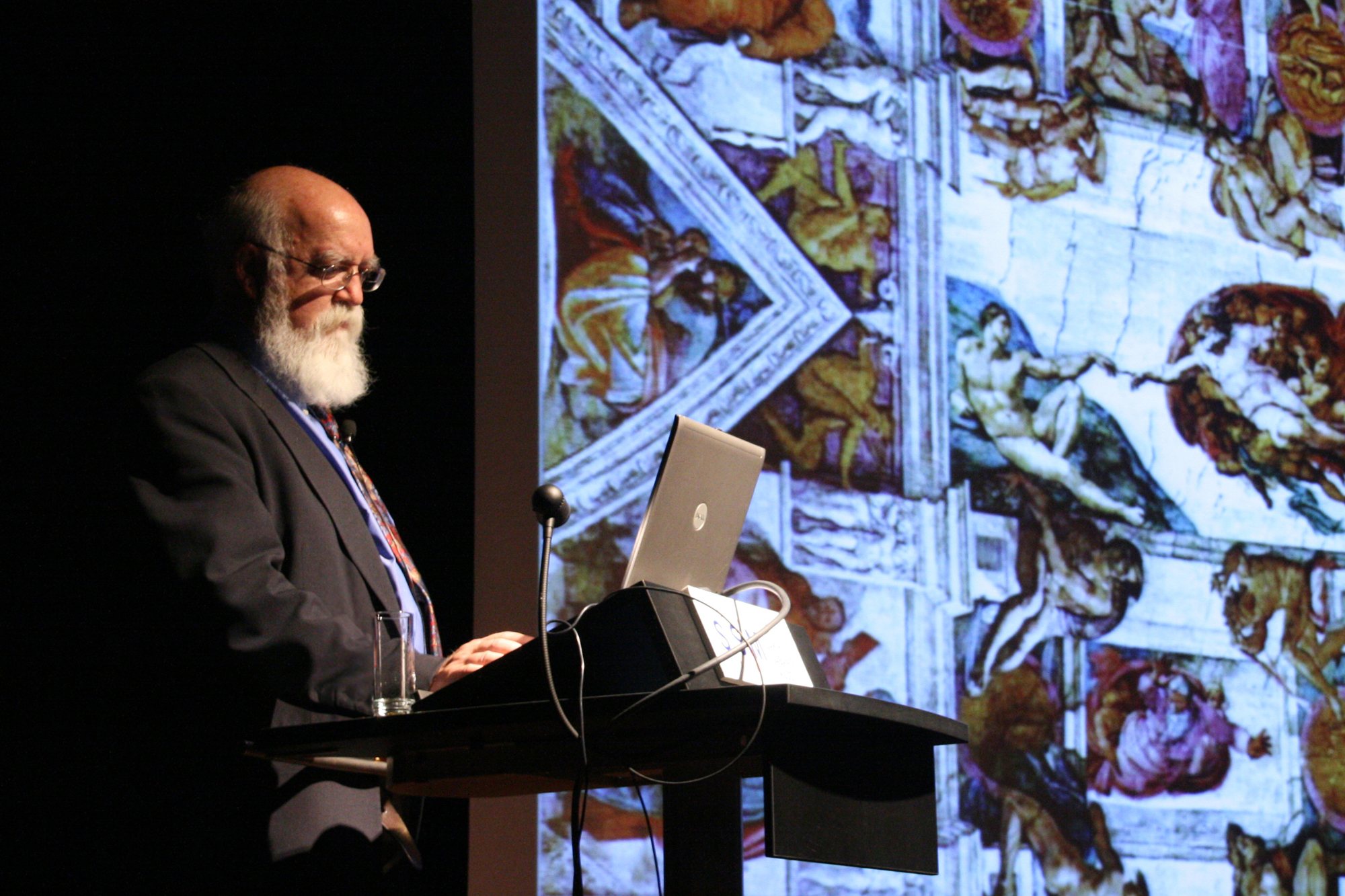
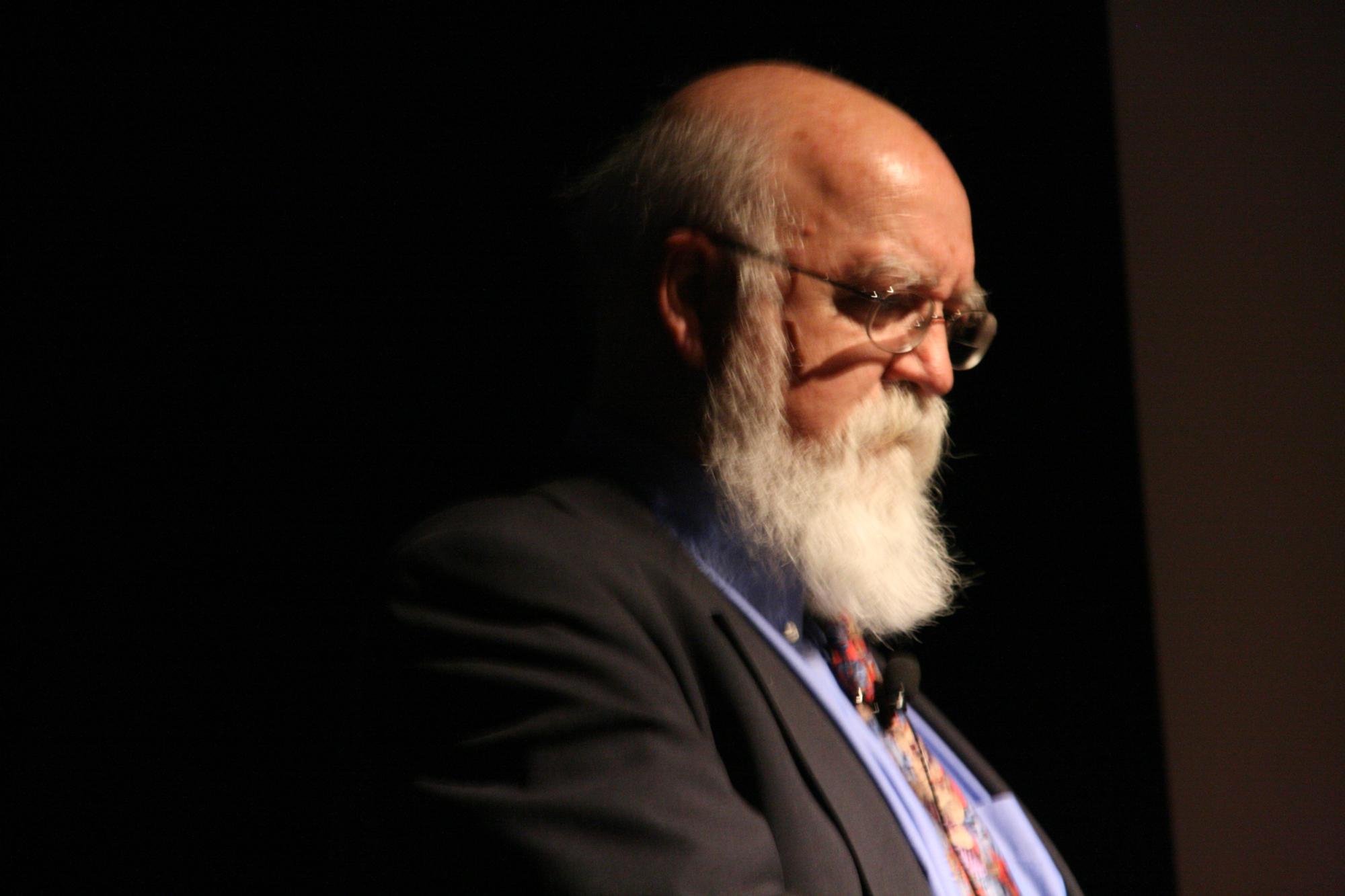
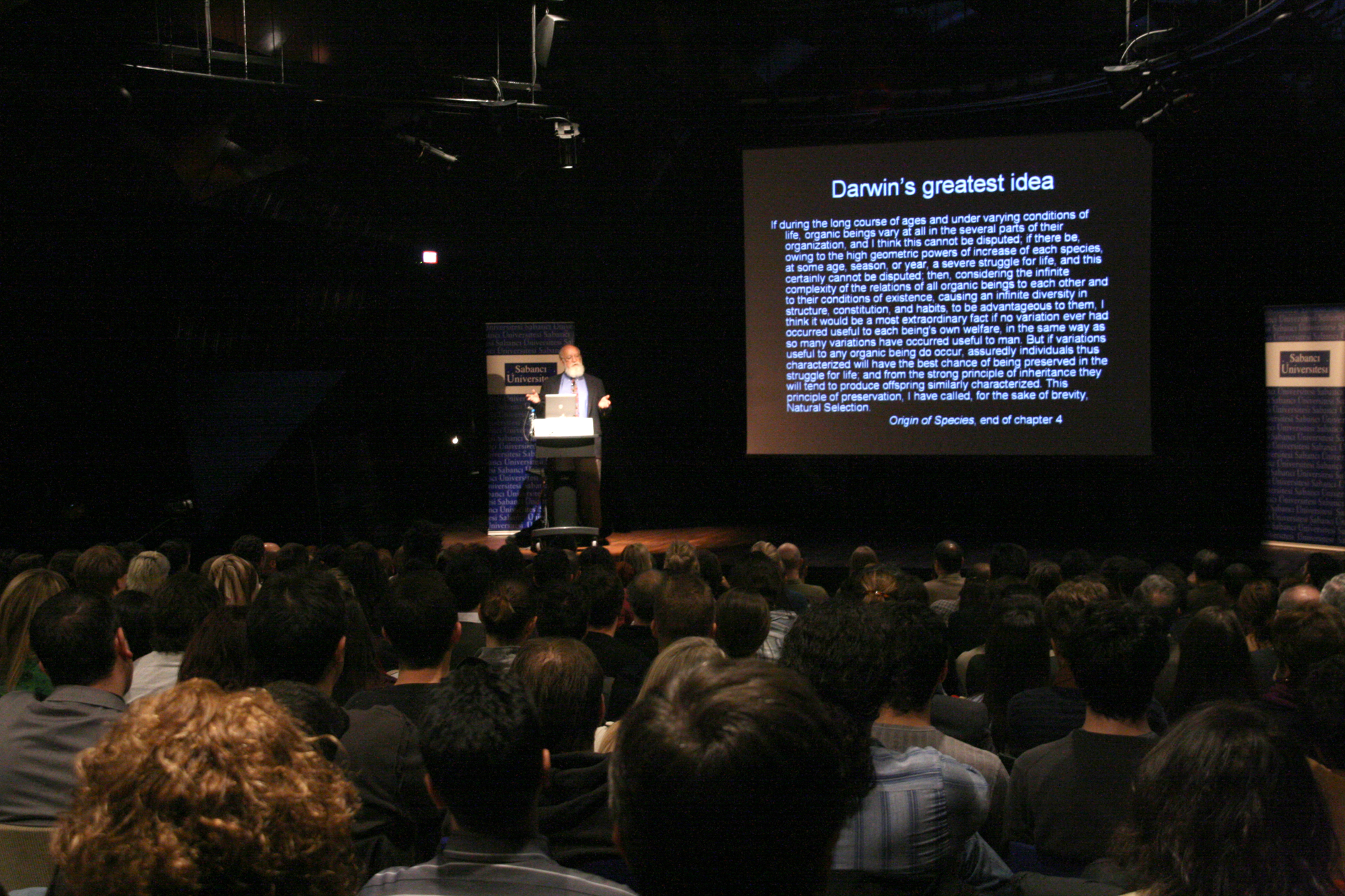
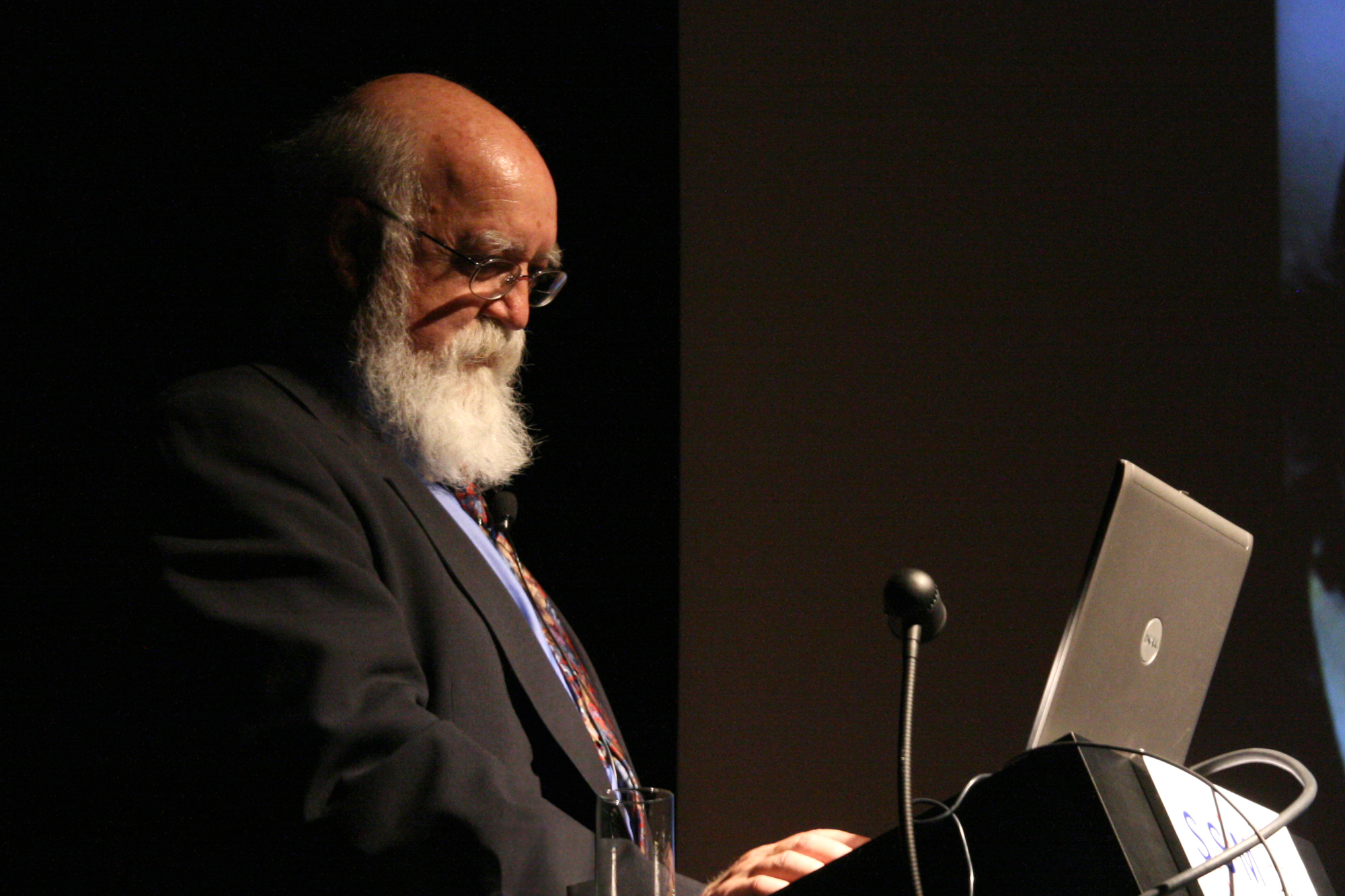
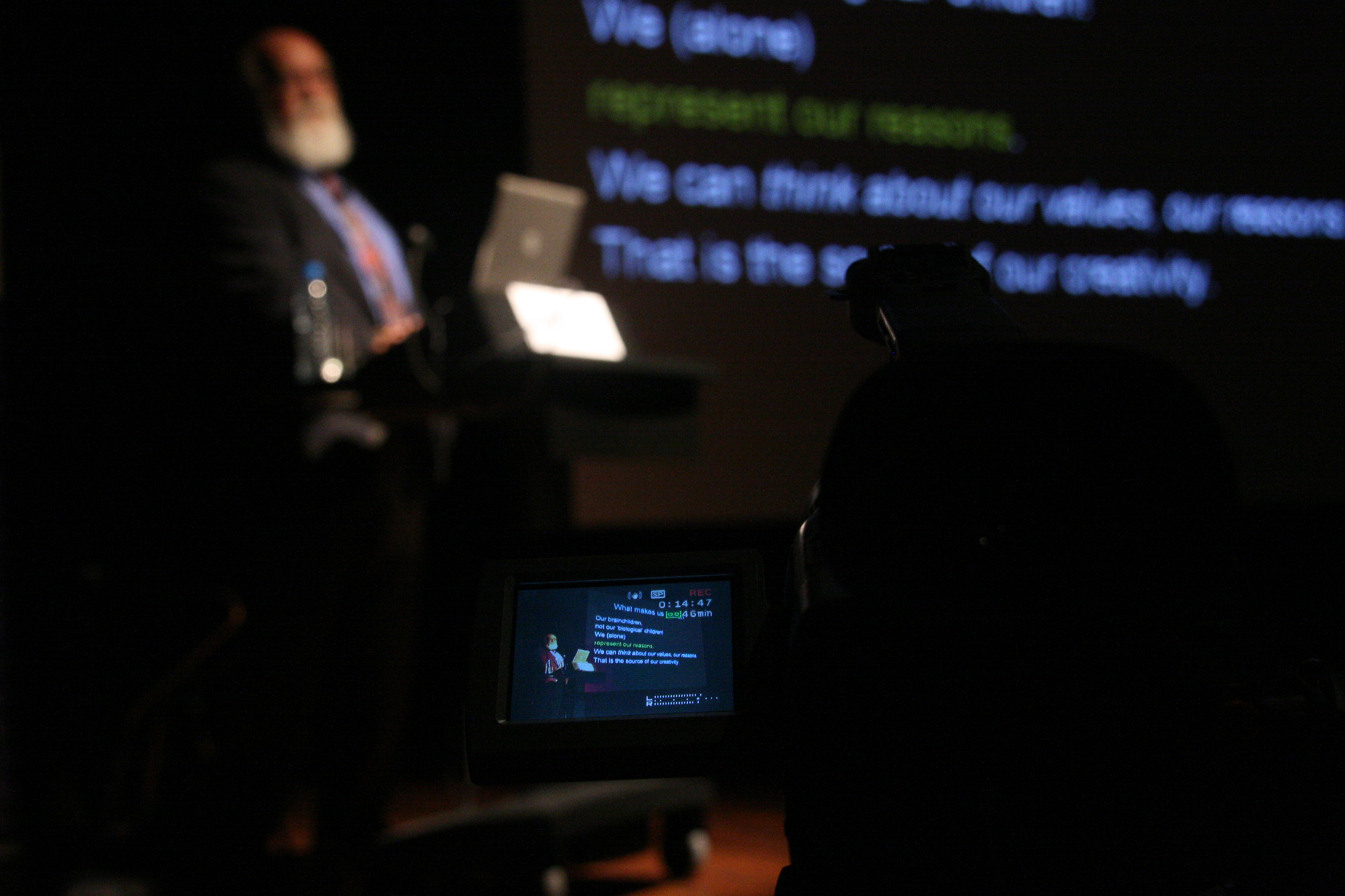
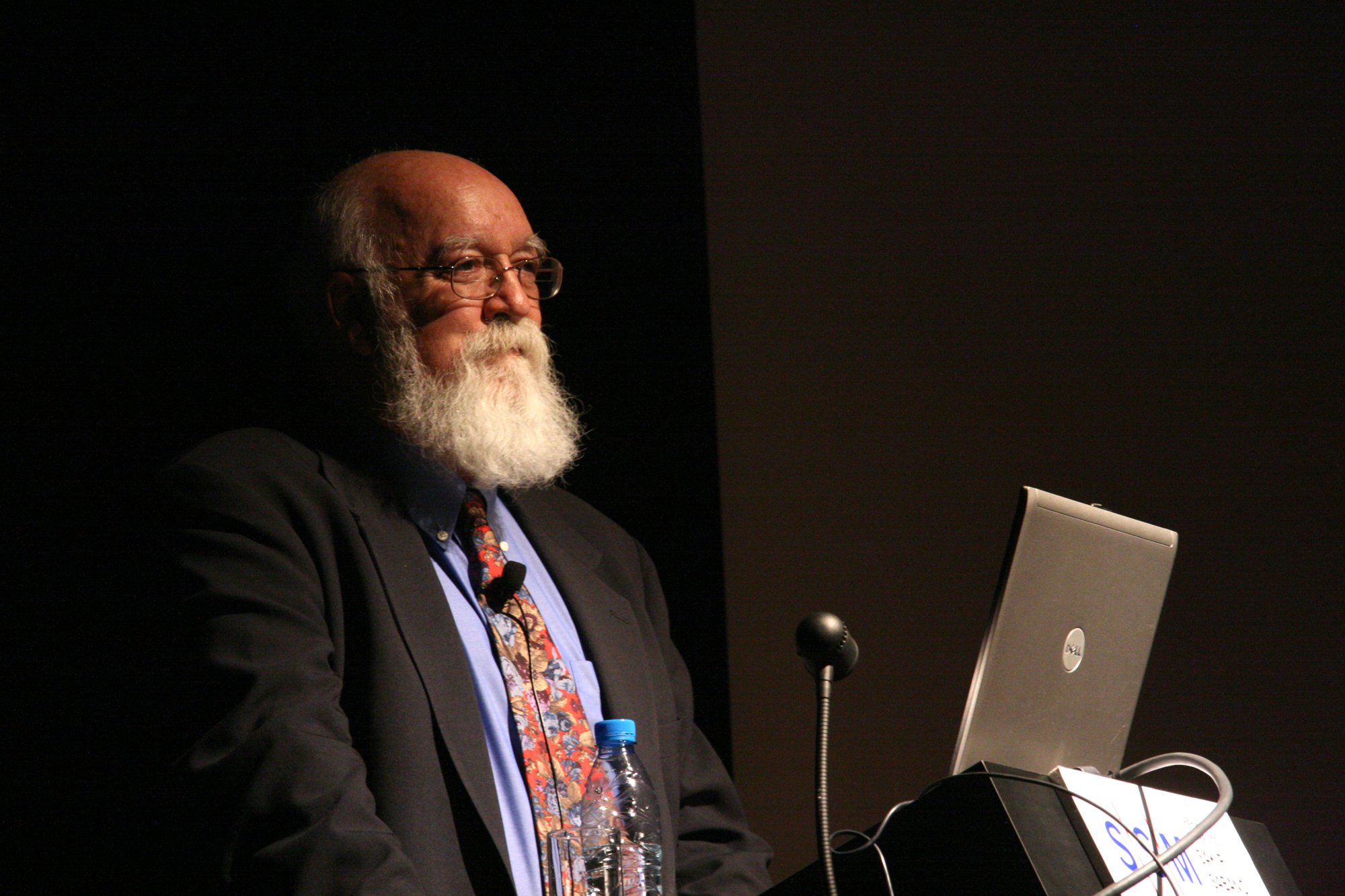
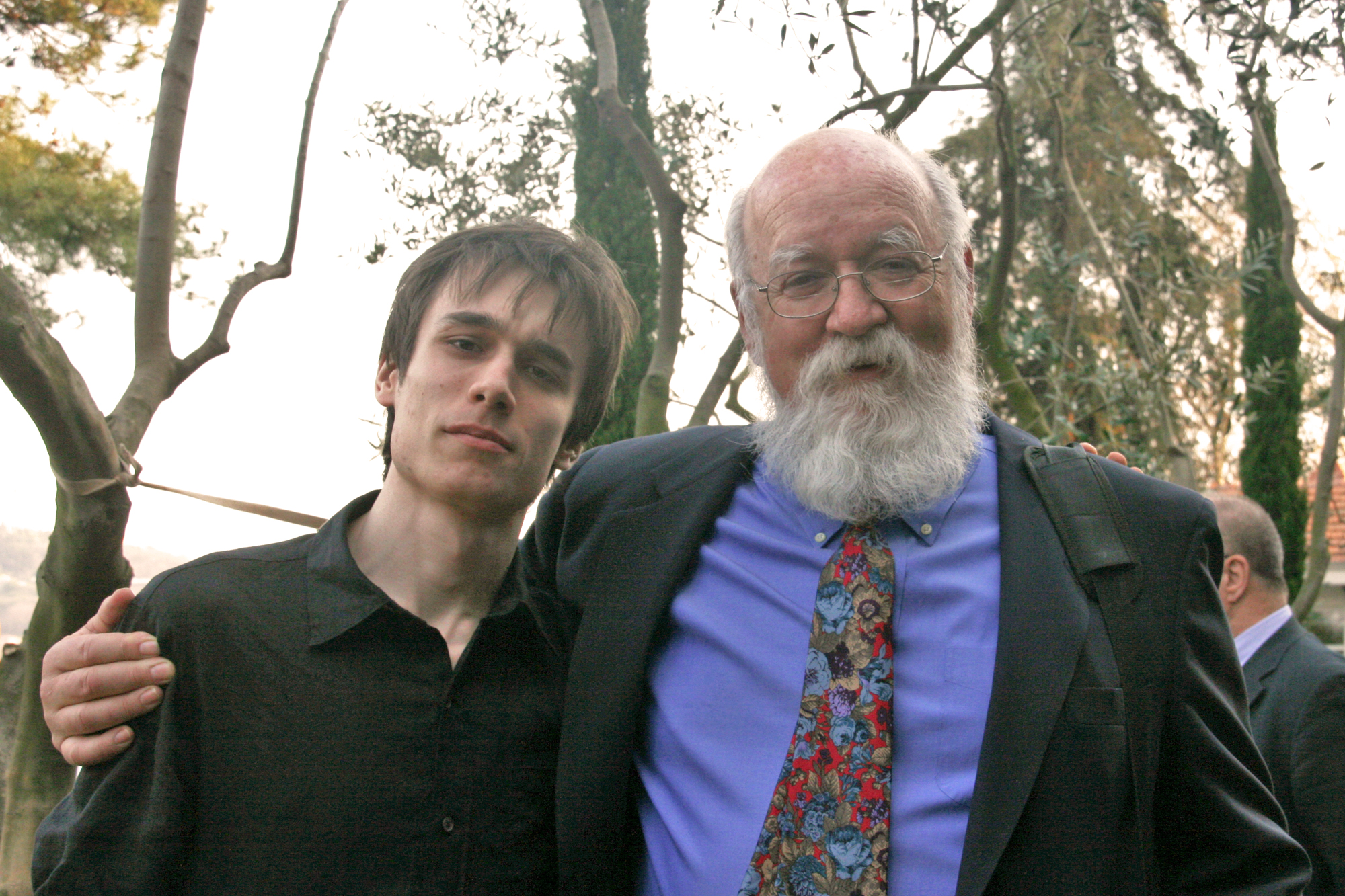
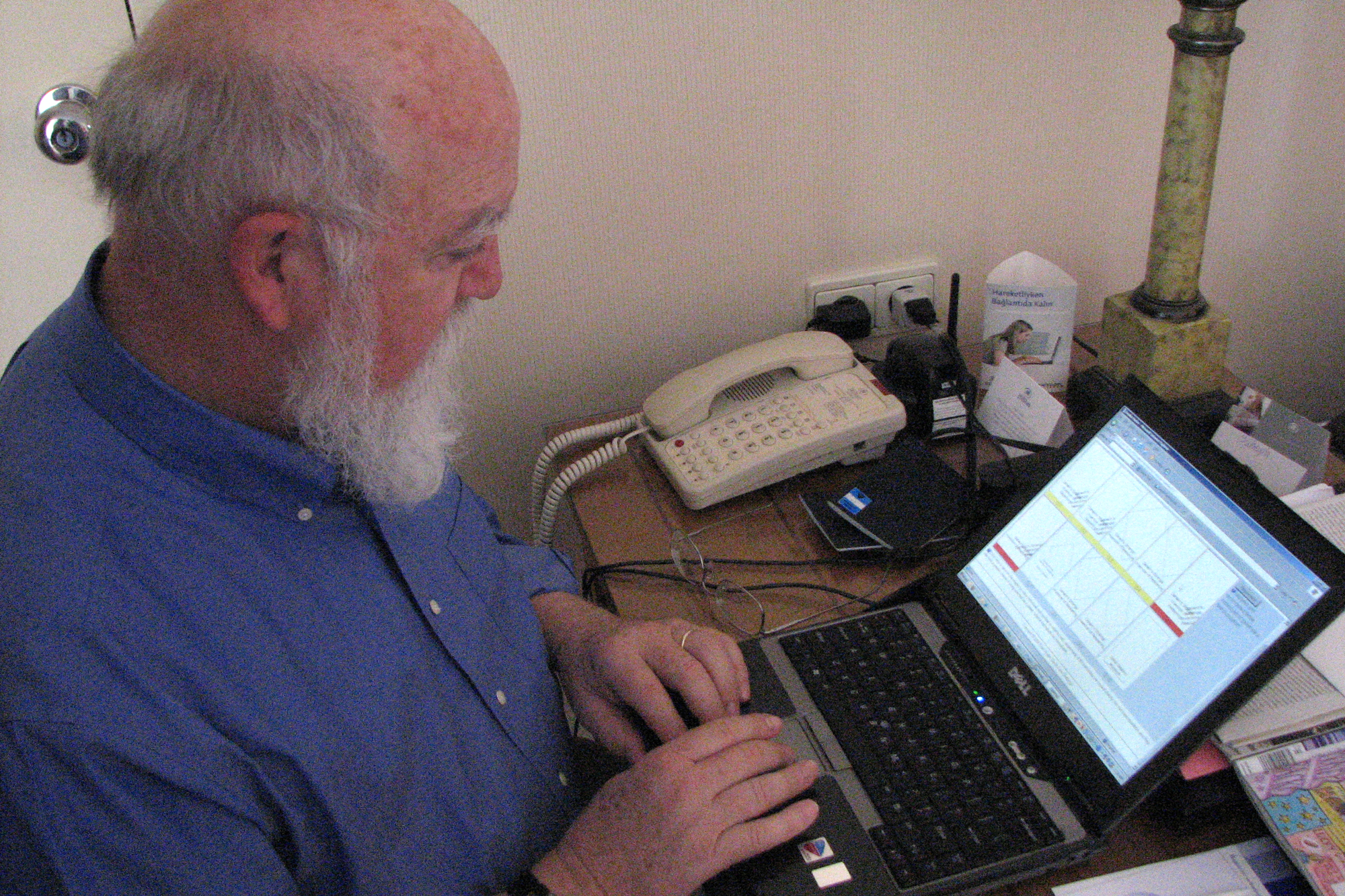
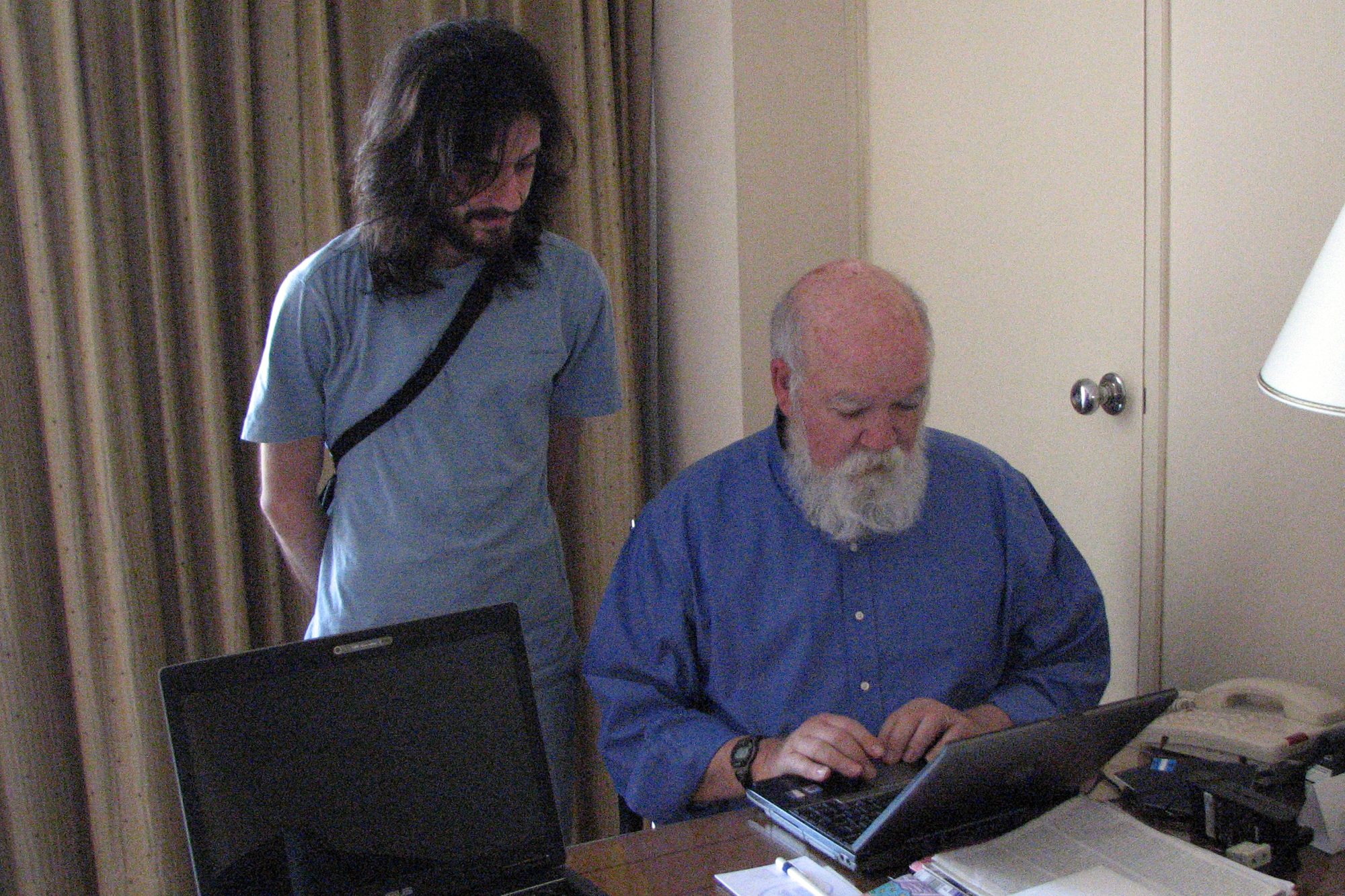
Like many others who have met Dan, I was starstruck during the whole experience; he had a huge presence – in both mental and physical terms – and an infectious positivity and humor blended with his charisma. He made everything easier for everybody around him. I was ready to be disappointed, keeping the reasonable advice “Never meet your heroes” at the back of my mind, but Dan Dennett was an extreme outlier.
Since then, we’ve corresponded regularly. In 2010, when I finished my master’s degree, I wanted to get his opinion about continuing my academic career in philosophy, possibly at Tufts. In addition to making the effort to get information from the university administrators about the bureaucratic details of such a transition, he gave me paragraphs of advice, including:
“I advise some of my best students, who really love philosophy and are really good at it, that they would probably be better off to be an amateur philosopher making a living in some other job, like Charles Ives, the great composer who ran an insurance agency! Amateurs can be leaders in the field (like Ives), and they actually get to devote more prime time hours to serious philosophy (and less time teaching introductory courses).”
He told me that “life as a philosopher is a long, uncertain trial” and that he was incredibly lucky to lead the sort of life that he got to lead. (Read his wonderful memoir to get an idea of how colorful the life he pursued was.) You could interpret this as a realistic warning and a gentle consolation for me, taking into account that in my case it could have been harder as I didn’t have a formal philosophy education and I had to relocate. But I believe it was also his honest opinion about amateur philosophers, based on the fact that he was less interested in an isolated practice of philosophy than the fruitful interactions between disciplines. He was the opposite of a gatekeeper. He writes in I’ve Been Thinking about how lonely and excluded he felt during his early career because of his interdisciplinary approach, and it is well known that his influences include many thinkers who aren’t “philosophers” such as Darwin, Hofstadter, Dawkins, Humphrey, Gregory, Minsky, and Brooks. He had a special respect for people who get their hands dirty and build things – robots, software, projects, platforms – and he was one of them. In any case, this conversation with him was one of the reasons I decided to stay an autodidact, making a living as a visual designer and spending all my free time on studying philosophy and science, and on building things.
Over the years, I’ve sent him my ideas, drafts, and projects, and always got encouraging comments. He was keen to forward them to other people who could be interested – he loved connecting people. I felt honored when he sent me his own drafts, sometimes asking for comments; I wasn’t able to offer much except listing my favorite parts and some related issues from my own areas of expertise but he was always kind enough to tell me they were useful. (At least, I was very good at catching typos.)
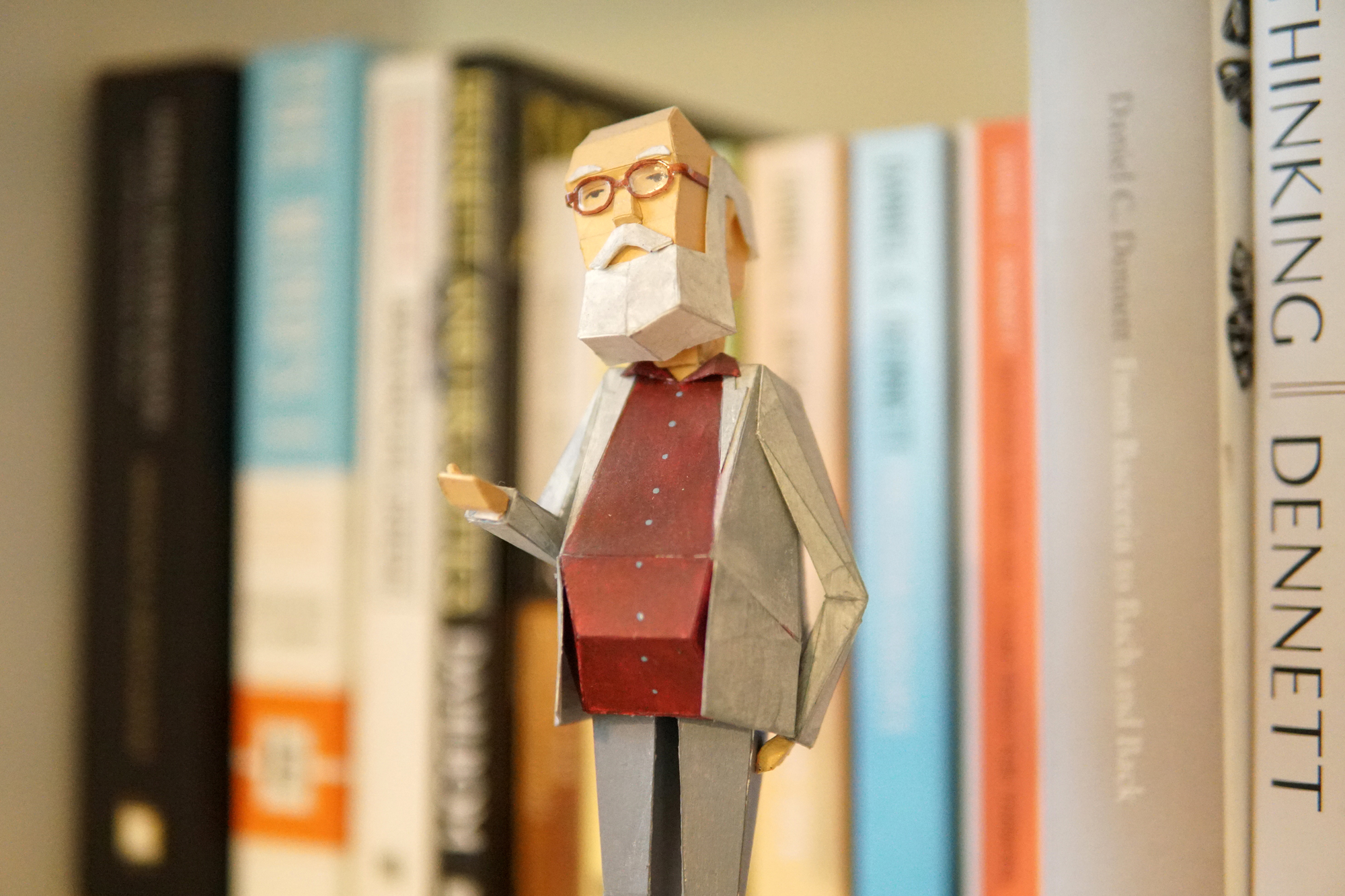
A sculptor himself, Dan loved this paper sculpture of him; a gift to me from my partner, custom made by Papier Atelier.
Humor was a big part of Dan’s brilliant mind. (He even co-authored a book on it.) When I gave him the news of the dysembryoplastic neuro-epithelial tumor (a DNET!) in my brain in 2013 and wrote that I became a p-zombie after the operation – a bad joke because I wouldn’t know it if I were a zombie – he replied:
“Thank goodness! Literally. It’s a relief to me to know that a DNET is one of the more benign things to have in your brain. As for your zombiehood, I think you have it a bit backwards: You’ve ALWAYS been a zombie; now you are simply being victimized by hallucinations of darkness inside! 🙂 Best wishes to you and may your brain continue to generate a host of good ideas. Take care of it—it’s a winner.”
We kept talking about a possible reunion. He repeatedly wrote about their plans to stop by Istanbul on one of their trips to Beirut or Crete but sadly it didn’t happen. I got a US visa in 2020 just to see him and attend the conference titled Brainstorming with Dan Dennett & Friends in April but the event was postponed because of the Covid pandemic (and unfortunately was never held).
His biggest support to me was related to my History of Philosophy project. When I sent him an updated version in 2018, he replied “What an amazing tour de force!” and tweeted about it, which led to a wave of international interest. I’ve kept him updated about the developments until last month. It felt great to hear from Dennett himself that my summary of his work was “pitch-perfect”. In January, he wrote “This is excellent, Cem. I was drawn to the Gilbert Ryle section and found how much more of my own thought was inspired by his than I realized! You have made a wonderful thinking tool for philosophers. I hope it spreads far and wide.” and forwarded it to an all-star list of philosophers. I’d never have dreamed that this project would be interesting for the featured philosophers themselves, so hearing that it was capable of offering insights for Daniel Dennett (about Ryle) was incredible.
Dan was one of the giants of his fields, and yet he was indifferent about the fact that I wasn’t close to his age, or a trained philosopher, or an active academic. He always found time and showed interest. And this wasn’t only about replying to emails; he would email you himself when he thought of you, or when he stumbled upon something that you may like. He sent an autographed copy to Istanbul every time a new book of his came out, without me asking. I was over the moon every time a package arrived from Boston and I read his notes on the autographed page. I didn’t know how to thank him.
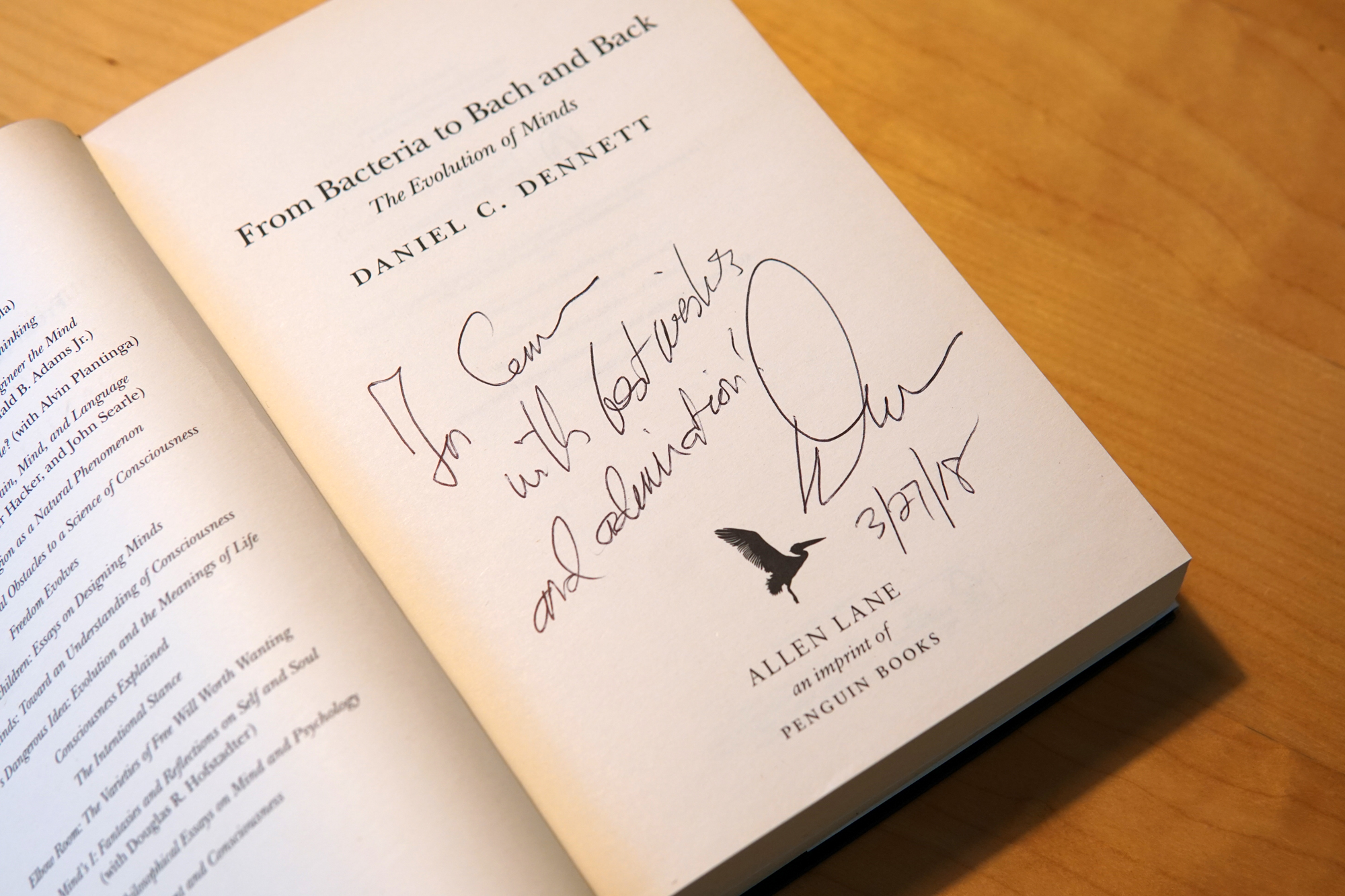
Similar anecdotes and remembrances I’ve seen confirm that Dan was very generous with his time, attention, and care to everybody. That’s just who he was: one of the kindest, warmest, funniest, most beautiful people I’ve known, in addition to being one of the most important thinkers of the 20th–21st centuries. It was great to know that he was just there, to offer ingenious diagnoses and unique thinking tools in philosophical and scientific debates or to offer feedback and support to younger people like us. He was the central node of a big intellectual network; a mentor, a friend, and a visually flawless grandfather figure to probably hundreds of people like me. I was not one of the lucky ones who directly worked with him, but I deeply share the sentiment that showing our work to Dan was a big motivation for us – and we all feel a bit alone now. He will be truly missed by so many.
